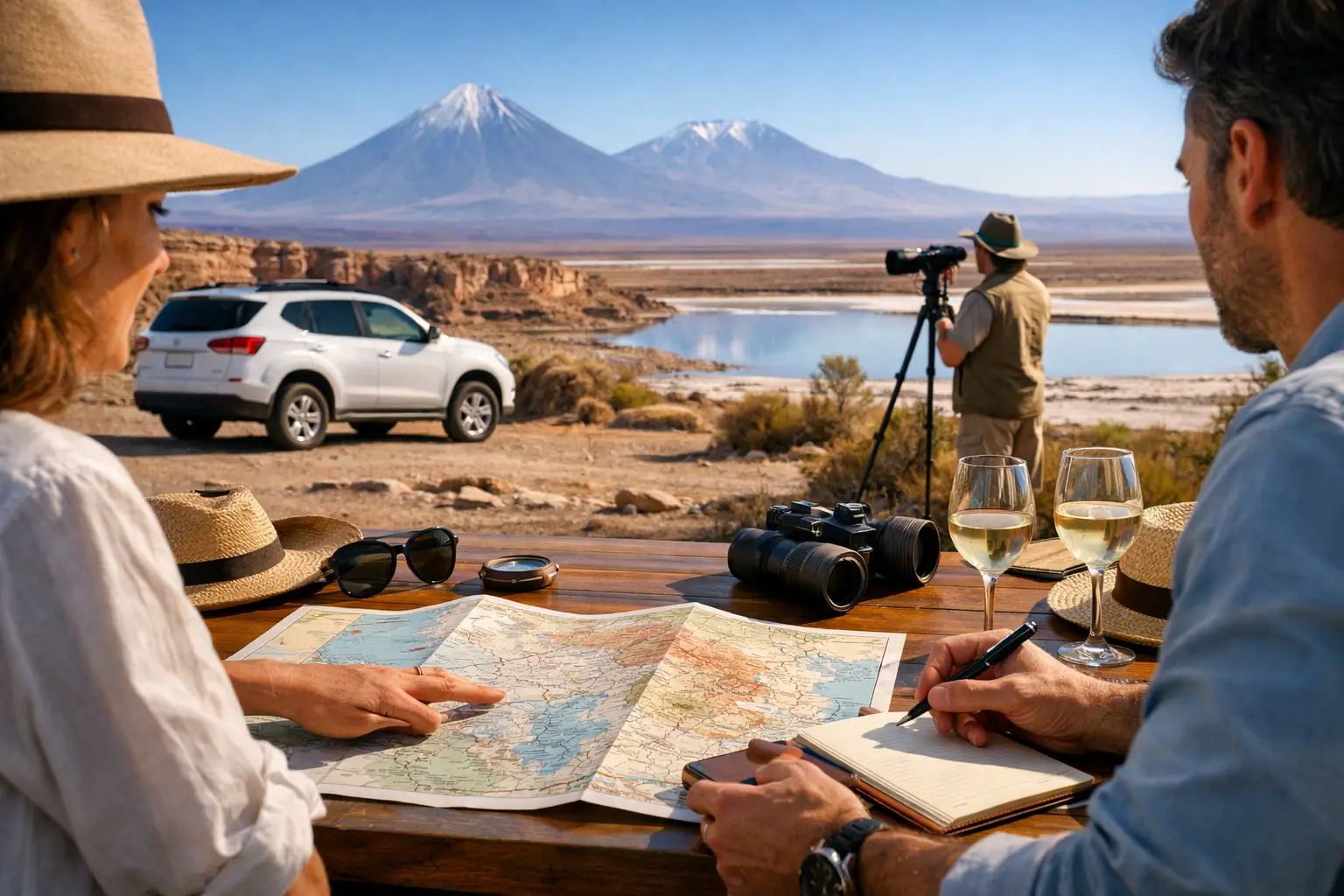
The first sight of the Atacama is often deceptively calm: adobe lanes, distant volcanoes, and light so clear that the horizon seems closer than it is. Then the altitude makes itself known. Learning how to design an Atacama itinerary means respecting that reality while making room for the desert’s most remarkable moments – a silent lagoon at sunrise, flamingos moving across mineral-rich water, or a private stargazing experience beneath one of the clearest skies on Earth.
For travelers who value comfort and thoughtful pacing, San Pedro de Atacama is not a destination to rush. Its landscapes are dramatic, but they are widely dispersed, conditions shift throughout the day, and the best experience is rarely about fitting in the greatest number of stops. It is about arriving well, acclimatizing properly, and having the flexibility to follow the desert at its finest.
Start With the Right Number of Nights
Four nights is an excellent starting point for an Atacama stay, while five or six nights allow for a more spacious rhythm. This gives you time to settle in after arriving from Calama, enjoy the lower-elevation highlights first, and reserve the highest excursions for later in the visit.
A three-night stay can work for travelers with limited time, but it calls for careful choices. Rather than trying to see every well-known landscape, select a few experiences that complement one another: perhaps Moon Valley in the afternoon, the Altiplanic Lagoons on a later day, and an evening focused on astronomy. With a private itinerary, departure times and the order of activities can be adjusted around energy levels, weather, and personal interests.
Six nights are especially rewarding for couples, families, and guests seeking a slower luxury experience. The additional time can create space for a restorative morning at the hotel, an unhurried lunch in San Pedro, or a landscape-focused outing that does not require an early return. In a place defined by vastness, time is part of the luxury.
How to Design an Atacama Itinerary Around Altitude
San Pedro de Atacama sits at roughly 7,900 feet above sea level. Several signature experiences take place considerably higher, including the Altiplanic Lagoons and the Tatio Geysers. The most common planning mistake is scheduling a high-altitude excursion immediately after arrival.
Your first day should remain gentle. A private transfer from Calama Airport, a comfortable hotel check-in, hydration, and a relaxed introduction to the village are usually enough. If you feel well, a late-afternoon visit to Moon Valley or a similarly low-elevation landscape can be a beautiful first encounter with the desert. The soft evening light makes the rock formations especially striking, and the timing avoids the stronger midday sun.
Plan the higher-altitude days after at least one night in San Pedro. Your private guide should pay attention to how you are feeling and adapt the day accordingly. Altitude affects each traveler differently, regardless of fitness or prior experience. A well-designed itinerary leaves room to change plans rather than treating every departure time as fixed.
The Tatio Geysers require an especially early start and often bring below-freezing morning temperatures. They can be extraordinary, with steam rising against a volcanic backdrop, but they are best placed after you have acclimatized. The Altiplanic Lagoons, by contrast, offer a full day of expansive scenery, highland wildlife, and changing colors across the water. Both deserve your best energy.
Build Each Day Around Light, Distance, and Comfort
Atacama is a destination where timing shapes the experience. Certain places are at their best in early morning, others in the final light before sunset, and stargazing naturally belongs to the night. A private plan allows the day to follow those conditions rather than forcing the landscapes into an arbitrary schedule.
For example, an afternoon in Moon Valley can pair naturally with sunset views from a carefully selected viewpoint. A morning around the Cejar Lagoon area can offer luminous salt flats and open skies, followed by time to return to your hotel before the evening. Astronomy should be planned with the lunar cycle in mind: darker nights can reveal more stars, while a brighter moon may favor a landscape-focused evening instead.
Distance matters, too. The desert roads extend far beyond San Pedro, and some excursions involve several hours of driving. Premium planning is not merely about a comfortable vehicle, though that certainly matters. It is about giving the drive purpose: knowing when a viewpoint is worth an unhurried pause, where a private picnic enhances the day, and when an earlier return will make tomorrow more enjoyable.
Avoid stacking two physically demanding experiences together simply because the schedule allows it. An early geyser morning followed by a late night of stargazing may sound appealing on paper, but it can diminish both. A better itinerary gives each major experience enough room to feel memorable rather than managed.
Choose Experiences That Feel Different From One Another
Atacama’s landscapes can appear similar in photographs, yet the experience on the ground is wonderfully varied. The strongest itinerary balances texture, color, scale, and mood.
Moon Valley brings sculpted salt and rock formations, with a lunar quality that becomes even more compelling near sunset. The Cejar Lagoon area introduces brilliant white salt crusts and intensely colored water, creating a very different visual world. The Altiplanic Lagoons feel grander and quieter, framed by mountains and populated by flamingos and other highland wildlife. Tatio adds geothermal drama, while a private astronomy session changes the scale entirely, replacing the horizon with the night sky.
Not every traveler needs every one of these experiences. Honeymooners may prioritize golden-hour landscapes, a refined private dinner, and astronomy. Families may appreciate a balanced mix of accessible walks, wildlife, and downtime at the hotel. Photographers often benefit from flexible departures that follow conditions rather than standard timings. For executives or guests arriving after a demanding international itinerary, fewer excursions with polished logistics can be far more rewarding than full days back to back.
A Thoughtful Five-Night Atacama Rhythm
A five-night stay creates an ideal balance of discovery and recovery. On arrival day, keep the plan simple: private airport service, hotel check-in, and time to acclimatize. Depending on arrival time and how you feel, an easy sunset outing can provide a graceful beginning.
On the second day, choose a lower-elevation experience such as Moon Valley or the Cejar Lagoon area. This is a chance to understand the desert’s forms and colors without placing extra pressure on your body. Return with enough time to enjoy your hotel and the quiet atmosphere of San Pedro.
The third day is well suited to the Altiplanic Lagoons. It is a fuller outing, but by this point you have had time to adjust to the elevation. The journey can be designed around scenic stops, wildlife viewing, and a relaxed meal in a setting that feels appropriately remote.
Keep day four adaptable. It might include a gentler landscape visit, a cultural encounter, or a slower day that protects your energy for an evening under the stars. This flexibility is valuable if weather changes, if you want more time at a favorite location, or if a high-altitude day leaves you pleasantly tired.
Schedule Tatio Geysers on day five or day six, depending on the length of your stay and your comfort at altitude. Its pre-dawn departure is substantial, but the reward is a rare scene of steam, silence, and volcanic light. Afterward, leave the afternoon open for rest.
Let Service Shape the Experience
The Atacama is remote by design. That is part of its appeal, but it also makes attentive coordination essential. Airport arrival times, hotel preferences, dietary needs, pacing, temperature changes, and last-minute adjustments should be considered before you reach San Pedro.
A private guide adds more than commentary. The right guide understands when to pause, when to move on, and when conditions call for a change of plan. English-speaking support and reliable private transportation bring reassurance, especially for families, first-time visitors to Chile, and travelers who prefer their time to feel effortless.
ChileRules can arrange a tailored Atacama journey that places your comfort and priorities at the center, from private Calama Airport transfers to carefully timed desert excursions. The aim is not to make the days busy. It is to make each one feel considered.
The desert rewards travelers who leave space for it. Build in time to breathe, watch the light change, and linger when a place feels extraordinary – because in Atacama, those unplanned minutes often become the ones you remember most.
At ChileRules, designing an Atacama itinerary is one of the journeys we love building most for our travelers. Our team draws on years of local experience to pace each day around altitude, light, and comfort, rather than a fixed checklist. If you would like a private Atacama journey designed around your own rhythm, explore how ChileRules creates custom-made trips across the desert and beyond.
Leave a Reply