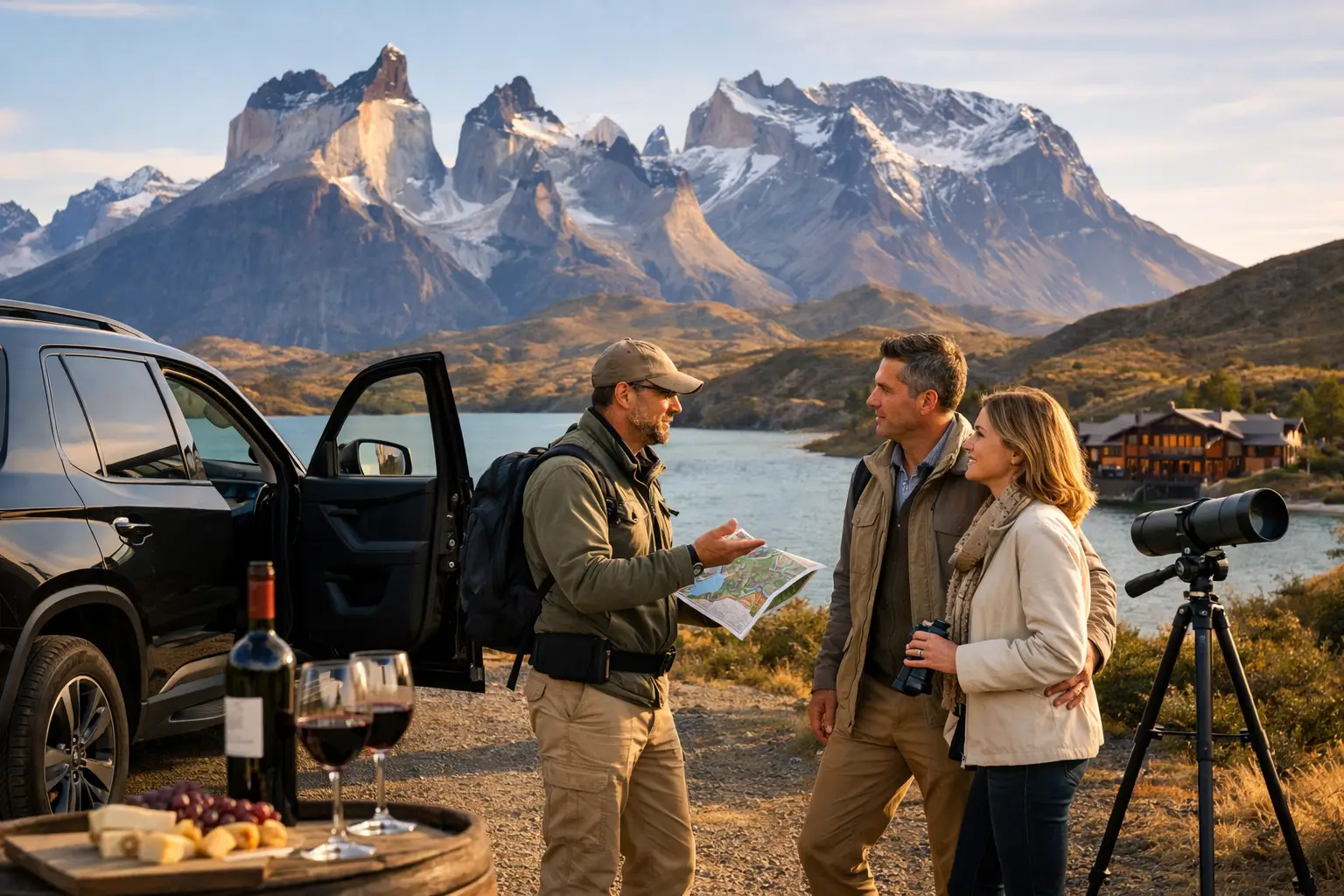
Patagonia rewards preparation in a way few destinations do. A missed connection, an overly ambitious driving day, or a hotel chosen without regard for location can turn remarkable scenery into unnecessary fatigue. This guide to Torres del Paine logistics is designed for travelers who want the park to feel spacious, comfortable, and wonderfully simple from arrival to departure.
At ChileRules, we arrange private journeys with the understanding that logistics are not an administrative detail. They shape how much time you have for a quiet sunrise, an unhurried lunch overlooking the Paine Massif, and the flexibility to pause when guanacos, condors, or the light demand attention.
Start With the Right Gateway
Most international guests begin in Santiago, then fly south to Patagonia. Puerto Natales is the closest practical arrival point for Torres del Paine, while Punta Arenas offers more frequent flight schedules and can be the better choice when timing, aircraft availability, or family travel calls for more options.
The right airport depends on the overall itinerary. Puerto Natales reduces ground-transfer time and works beautifully for a focused stay in and around the park. Punta Arenas adds more driving on arrival and departure days, but it can create a more reliable flight plan during certain travel periods. For guests traveling on a fixed international schedule, we often consider both airports before confirming the final itinerary.
A same-day connection from Santiago can work well when flights align, though a private itinerary should leave sensible room for weather, baggage, and the natural pace of a long-haul arrival. For some travelers, an overnight in Santiago before heading south makes the beginning of the journey considerably more relaxed.
Choose a Hotel for the Experience You Want
Torres del Paine is not one compact village with every hotel and trailhead nearby. Properties are spread across the park and its surrounding estancias, and their location has a meaningful effect on each day.
Staying inside or immediately beside the park offers dramatic access to landscapes and minimizes travel between excursions. It is an especially appealing choice for couples, honeymooners, and families who prefer to return to a refined lodge after a day outdoors. The trade-off is that some activities may require longer drives depending on which sector of the park you wish to explore.
A stay in Puerto Natales brings a lively waterfront setting and easy access to local dining before or after the park portion of a journey. It can be a good fit for travelers who want to combine Patagonia’s wilderness with a town stay, but daily visits to Torres del Paine require substantial travel time. For a shorter visit, we generally recommend prioritizing proximity to the park over convenience to town.
At ChileRules, we match accommodations to travel style rather than treating every Patagonia itinerary alike. A photographer rising before dawn, a family traveling with younger children, and a couple seeking a restorative lodge stay may all benefit from different locations and pacing.
Private Transfers Set the Tone
From Puerto Natales, the drive to the park commonly takes around two hours, depending on the hotel and road conditions. From Punta Arenas, it is longer and should be treated as a scenic travel day rather than an errand between airport and lodge.
A private transfer offers more than a comfortable vehicle. It gives you control over timing, space for luggage and outdoor layers, and the ability to stop safely when the landscape opens up. On clear days, the route itself is part of the experience: wide Patagonian steppe, distant peaks, ranchland, and sudden wildlife sightings make the journey feel far from ordinary.
For premium travelers, the details matter. Arrival coordination, a professional English-speaking driver or guide when requested, appropriate vehicle selection, and clear communication around changing flight times all remove friction from a remote destination. Our team at ChileRules plans these movements as part of the experience, not as separate pieces that guests must manage on their own.
Allow Enough Time in the Park
Three nights is a meaningful minimum for travelers who want to see signature landscapes without rushing. Four or five nights creates a more generous rhythm, with room for varied scenery, weather adjustments, and genuine downtime at the lodge.
The park’s highlights are spread out. One day may focus on the eastern sector and its iconic views toward the towers; another may be devoted to Lake Pehoé, Salto Grande, and the western side of the massif. A third can include a private boat excursion, a guided walk tailored to your ability, or a quieter wildlife-focused route.
Trying to fit every celebrated viewpoint into two days often produces long hours in the vehicle and little time to absorb the setting. Patagonia is better when the itinerary has breathing room. Wind can change plans, clouds can conceal a peak for much of a morning, and the most memorable moments often arrive between scheduled stops.
Build Around Weather, Not Against It
Torres del Paine weather is famously changeable. Wind, rain, sun, and cloud can all arrive within a single excursion. That unpredictability is part of the park’s character, but it makes flexibility essential.
We recommend placing the most weather-dependent activities early enough in the stay that they can be moved if conditions are poor. A well-designed program balances landmark outings with options that remain rewarding in mixed weather, such as scenic drives, shorter walks, wildlife viewing, or a leisurely lodge afternoon with the mountains beyond the windows.
Bring layers even in warmer months, including a windproof outer shell, comfortable walking shoes, sunglasses, and sun protection. The goal is not to dress for hardship. It is to stay comfortable enough that changing conditions do not distract from the view.
Plan Excursions Around Your Pace
The park supports everything from gentle scenic walks to full-day hiking. A private approach allows the day to be adjusted to your interests, energy, and desired level of activity rather than following a fixed schedule.
For active guests, a guided hike toward the Base Torres viewpoint is an exceptional full-day objective, but it is demanding and requires an early start, favorable conditions, and a realistic assessment of fitness. It is not the only way to experience Torres del Paine. The French Valley, Grey area, lakeside paths, and carefully selected viewpoints all offer powerful perspectives with different levels of effort.
Families and multigenerational groups often appreciate pairing one more active day with a scenic day that includes waterfalls, short walks, picnic stops, and wildlife observation. Private planning makes that balance possible without compromising the quality of the experience.
Keep Meals and Timing Thoughtful
Remote park days require advance planning. Depending on the lodge and excursion format, lunch may be a prepared picnic, a packed meal, or a return to the property. Dietary preferences should be communicated before arrival so that they are handled quietly and well.
Early departures can be worthwhile for calm light and fewer people at key viewpoints, though not every day needs to begin before sunrise. We consider the season, the guests’ interests, and the next day’s program when setting departure times. A journey should feel curated, not over-programmed.
Add Patagonia to a Wider Chile Journey
Torres del Paine is often the emotional centerpiece of a Chile itinerary, yet it pairs naturally with Santiago, the Atacama Desert, or Chiloé when time permits. The key is to avoid treating these regions as simple transfers on a map. Chile is long, and each transition deserves enough time to remain enjoyable.
For travelers combining destinations, private airport coordination and carefully chosen overnights protect the experience from becoming a sequence of rushed travel days. ChileRules can design the journey around the moments that matter most, whether that means a quiet wine-country pause before Patagonia or an extended stay after the park to rest and reflect.
A well-planned Torres del Paine stay should leave you with more than photographs of the towers. It should leave you with time to watch the weather move across the peaks, to hear the wind over the grasslands, and to feel that every important detail was already in capable hands.
Plan Your Trip with ChileRules
Leave a Reply